|
Obesity Epidemic
A study by the Monash University Accident Research Centre has found that Aussie kids are becoming so fat they need bigger booster seats to keep them safe in cars. The study found that almost 40% of children who met the height criteria for booster seats were too heavy to use them.
Researchers found that parents were restraining overweight and obese youngsters with adult seatbelts, a dangerous alternative that left them more vulnerable to injury in an accident. The researchers are calling for a bigger, tougher booster seat standard to cope with weights up to 10kg heavier, putting Australia in line with the US.
This is the latest in a string of indicators showing the impact of the nation's obesity epidemic. We've had the call for bigger chairs and hospital beds, larger toiler seats, strengthened ambulances and even tougher equipment in mortuaries and now bigger booster seats too.
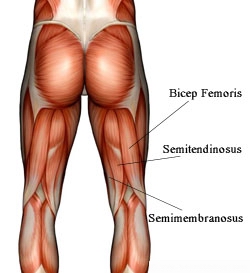
Muscle of the Month - Hamstrings
The hamstrings are the group of muscles at the back of our thighs. The hamstrings are actually made up of 3 muscles called: the Biceps Femoris, Semitendinosus and the Semimembranosus. The hamstrings’ main function is to move the upper leg backwards at the hip joint and pull the lower leg up at the knee joint.
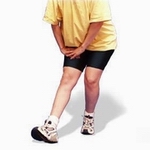
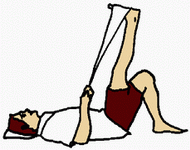
Stretching the hamstrings is very important. The hamstrings are shortened because firstly we use them constantly during the day by walking and running. Used muscles tend to want to get shorter and so need to be stretched. Secondly and far more importantly muscles that are held in a shortened state for long periods are far more likely to shorten and stay short. The one “activity” that we are all guilty of that shortens the hamstrings more than anything is sitting. By sitting down for long periods we are making our hamstrings dangerously tight which can lead to all sorts of problems.
|
|
Tight hamstrings are responsible for a lot of the back pain injuries. Because we sit so much throughout the day we shorten the muscles and although when we stand we are still able to stand up straight, by doing this we create a huge pressure build up in the hip joint areas and indirectly to the lower back. This will take time to happen, but gradually as our bones are pulled out of their natural lines and our bodies try to adapt, these movements will create weaknesses that mean we are primed for an injury.
Interval Training
Do you want to know a simple way to boost your calorie-buring power without increasing the amount of time you exercise? Try interval training.
Interval training is simply alternating bursts of intense activity with intervals of lighter activity.
Take walking. If you're in good shape, you might incorporate short bursts of jogging into your regular brisk walks. If you're less fit, you might alternate leisurely walking with periods of faster walking. For example, if you're walking outdoors, you could walk faster between certain mailboxes, trees or other landmarks. Another example would be 1 minute of high intensity work (jogging), followed by 2 minutes of low intensity exercise (power walking) and alternating that several times for 15-30 minutes.
Interval training has these benefits:
-
You'll burn more calories. The more vigorously you exercise, the more calories you'll burn — even if you increase intensity for just a few minutes at a time.
-
You'll improve your aerobic capacity. As your cardiovascular fitness improves, you'll be able to exercise longer or with more intensity. Imagine finishing your 60-minute walk in 45 minutes — or the additional calories you'll burn by keeping up the pace for the full 60 minutes.
-
You'll keep boredom at bay. Turning up your intensity in short intervals can add variety to your exercise routine.
-
You don't need special equipment. You can simply modify your current routine.
Wine
If you've had a hard day at work, there's nothing better than a glass of wine or two. A lot of people can quite easily polish off a bottle on their own in one night. However, be careful if you're trying to lose those extra kilos. A bottle of wine has around 560 calories - you will need to walk for 2 hours to burn it off!!
Try setting yourself a goal of cutting out one glass of wine per night for a month. You'll be surprised what a difference this will make.
Note: For those who enjoy beer instead of wine, a stubbie or can of full strength beer has between 140 to 170 calories.
Arthritis
Arthritis is a name for a group of conditions affecting the joints. These conditions cause damage to the joints, usually resulting in pain and stiffness. While arthritis is not yet curable, the condition is usually manageable.
Arthritis is the major cause of disability and chronic pain in Australia, with 3.85 million Australians affected and costs $24 billion each year in medical care and indirect costs such as loss of earnings and lost production. While there are about 100 forms of arthritis, the three most significant - osteoarthritis, rheumatoid arthritis and gout - account for more than 95% of cases in Australia.
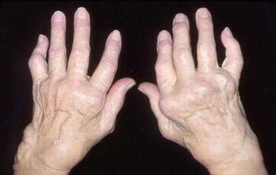 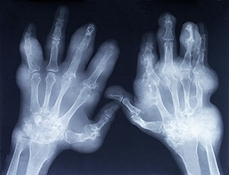
Arthritis Australia have joined forces with the Australian Rheumatology Association to produce a comprehensive set of information sheets for people with arthritis. The launch of these information sheets coincides with Arthritis Awareness Week, 6-12 April 2008, aiming to increase awareness and support self management for people with arthritis. The sheets cover topics such as medications, pain management, exercise, glucosamine, fish oils and complementary therapies.
For more information or to download the information sheets, go to Arthritis Australia's website at www.arthritisaustralia.com.au.
Nothing contained in this newsletter is intended to be used as medical advice and it is not intended to be used to diagnose, treat, cure or prevent any disease, nor should it be used for therapeutic purposes or as a substitute for your own health professional's advice.
|