MOBILE PERSONAL TRAINER
 
CONTACT INFORMATION
Telephone:
0403-009-277
Email:


NEWSLETTER
April 2009


End of Daylight Saving

This month spells the end of daylight saving and for those of you who got used to exercising after work, don't stop just because it will be dark.

Try waking up a little earlier and exercise in the morning. If you are not a morning person, go for a walk during lunchtime or for your morning coffee. Instead of going to the nearest cafe to buy your lunch or coffee, look for another cafe 2 or 3 blocks away, then you have to walk the 2 or 3 blocks back to the office - and as a bonus you could end up finding a really nice place to get your lunch in the future.

Remember, the recommendation is for adults to be moderately active for at least 30 minutes every day. The 30 minutes can be made up of three 10 minutes sessions if 30 minutes in one go is too much at first. Any activity is better than none.

The Glycemic Index

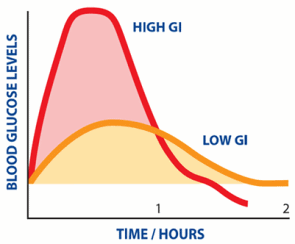
The glycemic index or GI is a measure (on a scale from 0 to 100) of the effects of carbohydrates on blood glucose levels. Carbs that break down rapidly during digestion, releasing glucose rapidly into the bloodstream have a high GI; while carbs that break down slowly, releasing glucose gradually into the bloodstream, have a low GI.

Low GI diets have been shown to improve both glucose and lipid levels in people with diabetes (type 1 and type 2). They have benefits for weight control because they help control appetite and delay hunger.

Classification of Foods

Classification
GI Range
Examples
Low GI
55 or less
most fruit and vegetables (except potatoes, watermelon), grainy breads
Medium GI
56-69
basmati rice, orange, sweet potato
High GI
70 and above
baked potato, watermelon, croissant, white bread

If you're like me and love eating bread, try the following low GI varieties:

  • Bakers Delight - Cape Seed Loaf (GI 48)
  • Bürgen - Wholemeal and Seeds (GI 39)
  • Tip Top - 9 Grains (GI 43)

The GI symbol makes healthy shopping easier. The symbol identifies foods that have had their GI tested properly, and that they are a healthy choice for their food category. The GI ranking (low, medium or high) is stated beneath the symbol and the GI value is specified near the nutritional information panel.

To earn the GI symbol certification, foods must be a good source of carbs, and meet a host of other nutrient criteria including kilojoules, total and saturated fat, sodium (salt), and when appropriate, dietary fibre and calcium.

For more information, visit the Glycemic Index website (http://www.glycemicindex.com/) or the GI Symbol Program website (http://www.gisymbol.com.au/index.htm).

Cutting Back Coffee

There is nothing better than a cup of coffee to start the day. Some people never notice any side-effects of coffee until they have to go without when they experience the massive headache that never goes away.

You have too much caffeine in your system if you've got any of these symptoms:

insomnia;
too-rapid heartbeats (tachycardia);
heartburn;
irritability;
mind always in overdrive;
over-anxious (‘coffee jitters’);
upset stomach; or
frequent urination.

What Amount Is Safe?

Caffeine acts on the central nervous system, speeding up the heartbeat and rate of breathing, dilating blood vessels and relaxing smooth muscles. It boosts alertness and concentration and overcomes the perception of fatigue - which is why it is so popular to "kick-start" our busy lives.

Most of us can handle around 300mg of caffeine (4 or 5 cups of instant coffee or 3 shots of espresso) a day without problems.

Kick The Habit Gradually

If you think you are a caffeine junkie, don’t go cold turkey as you'll experience the headaches. Cut back on caffeine gradually ( one less cup day by day) to allow your body to adapt.

1. Start on a weekend or on holidays when you less stressed, by dropping your afternoon coffee or energy drinks. Don't have any caffeine after 4pm so you sleep well.
2. Aim to eventually reduce your overall caffeine intake by half.
3. Switch to lower caffeine options:
  • Soft drink instead of energy drink;
  • Decaf coffee instead of regular coffee;
  • Tea or herbal tea instead of coffee (green and black tea have around half to one-third the caffeine of coffee).

Easter Bunny

Have fun looking for eggs from the Easter bunny but be careful not to eat too many.

Nothing contained in this newsletter is intended to be used as medical advice and it is not intended to be used to diagnose, treat, cure or prevent any disease, nor should it be used for therapeutic purposes or as a substitute for your own health professional's advice.


© 2007-2010 Andrew Ho  

Mobile Personal Training | Outdoor Group Fitness Training
Weight Loss | Increase Fitness | Nutrition Advice | Cardio, Strength & Core Training

Circuit Training | Boxercise | Suspension Training

Catering for the following areas of Sydney:
Lower North Shore - Artarmon, Balmoral, Beauty Point, Cammeray, Castlecrag, Chatswood, Clifton Gardens, Cremorne, Crows Nest, Greenwich, Kirribilli, Lane Cove, Lavender Bay, Linley Point, Longueville, McMahons Point, Middle Cove, Middle Harbour, Milsons Point, Mosman, Naremburn, Neutral Bay, North Sydney, Northbridge, Northwood, Riverview, Spit Junction, St Leonards, Waverton, Willoughby and Wollstonecraft
Upper North Shore - Castle Cove, Gordon, Lindfield, Pymble, Roseville, St Ives, Turramurra, Wahroonga, Warrawee and West Pymble
Northern Suburbs - East Ryde, Eastwood, Epping, Gladesville, Henley, Hunters Hill, Huntleys Cove, Huntleys Point, Macquarie Park, Marsfield, North Ryde and Woolwich