|
Low GI Foods
As discussed in last month's newsletter, low GI (glycemic index) diets have been shown to improve both glucose and lipid levels in people with diabetes (type 1 and type 2). They have benefits for weight control because they help control appetite and delay hunger.
Below are some lower GI options for you to consider the next time you go to the supermarket.
Rice
- Doongara Rice (GI 54)
- Moolgiri Rice (GI 54)
- Basmati Rice (GI 58)
|
Breakfast Cereal
- Kellogg's All-Bran (GI 34)
- Kellogg's Guardian (GI 37)
- Most muesli (GI 40-50)
|
The GI values for some of the most common fruits are as follows:
- apple (GI 38)
- apricot (GI 57)
- banana (GI 52 - the more ripe, the higher the GI)
- cherries (GI 63)
- grapes (GI 53)
- mango (GI 51)
- orange (GI 42)
- peach (GI 42)
- pear (GI 38)
- rockmelon (GI 68)
- strawberries (GI 40)
- watermelon (GI 76)
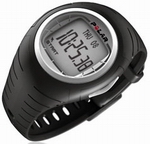
Heart Rate Monitors
Heart rate monitors ("HRM") are not only for professional athletes. To get the most out of exercise, monitoring your intensity (or heart rate) throughout your workout will ensure that you're working within your heart rate training zone. Working too hard could lead to injury and burnout while not working hard enough can lead to frustration when you don't see results.
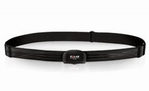
Most HRM consists of two parts: the chest strap (transmitter) and the watch (receiver). The chest strap detects electronic signals your heart makes when it beats
and transmits this information wirelessly to the watch.
To get the maximum benefit of your workouts, you should work
within your target heart zones (usually between 70% and 85%
of your maximum heart rate). The simplest way to calculate
your maximum heart rate is 220 minus your age. For example,
if you are 32 years old, your maximum heart rate is approximately
188 (220 - 32). If you want to exercise at an intensity level
of between 70% and 85% of your maximum heart rate (her target
heart zone), this equates to between 132 and 160 beats per
minute.
The most basic HRM start at around $120 while the most sophisticated ones sell for around $800. Polar, Suunto, Timex and Oregon are some of the more popular brands. If you're trying to lose weight, consider buying one which calculates the number of calories burned (these start at around $200).
If you do not want to use a HRM, you can take the talk test.
You should be able to carry on a conversation during your
workout. If you are breathless, or can't talk, you're working
too hard. Also, keep in mind that dizziness and light-headedness
is not a good sign. If you experience this, you should stop
immediately.
Another easy way to monitor yourself is by using a Perceived Rate of Exertion Scale. This is a scale of 1-10 for describing how hard you're working, 1 being extremely easy and 10 being extremely hard. You should aim to be at least 6 or 7 during your workouts.
Calcium and Osteoporosis
Half of Australian women and a quarter of men over the age of 60 will suffer a bone fracture, usually in their hip, spine or wrist, due to osteoporosis. Osteoporosis occurs when bones become brittle due to loss of important minerals such as calcium.
Risk factors for osteoporosis include a family history of the condition, rheumatoid arthritis, coeliac disease, impotence, early menopause, smoking, a low-calcium diet and a sedentary lifestyle over many years.
Calcium Rich Foods
| Plain yoghurt |
200g tub |
390 calcium (mg) |
| Flavoured yoghurt |
200g tub |
316 calcium (mg) |
| Calcium fortified milk |
200ml glass |
353 calcium (mg) |
| Skim milk |
200ml glass |
320 calcium (mg) |
| Cheddar cheese |
40g (2 slices) |
327 calcium (mg) |
| Tinned red salmon |
100g |
220 calcium (mg) |
| Tofu |
100g |
150 calcium (mg) |
| Almonds |
50g |
110 calcium (mg) |
Metabolism
Metabolism refers to the numerous chemical processes going on continuously inside your body for normal functioning. Your body's metabolic rate (or total energy expenditure) can be divided into three components:
 |
Basal Metabolic Rate (BMR) - accounts for 50% to 80% of your energy used. The BMR
refers to the amount of energy your body needs to maintain
itself. Lean muscle mass is largely responsible for the
BMR. This is why it's important to preserve muscle mass
when you try to lose weight, since the BMR accounts for
so much of the energy we use. An average male may have
a BMR of around 7,100 kilojoules (1,690 calories) per
day, while an average female may have a BMR of around
5,900 kJ (1,405 calories) per day. Energy expenditure
is continuous, but the rate varies throughout the day
(usually lowest in the early morning). |
|
Energy used during physical activity - accounts for around 20% of your daily energy
use. During strenuous exercise, your body can burn as much
as 3,000 kJ (714 calories) per hour. Energy used during
exercise is the only form of energy expenditure that you
have any control over.
|
|
Thermic effect of food - accounts
for about 5% to 10% of your energy use. This is the energy
you use to eat, digest and metabolise food. Your BMR rises
after you eat because you use energy to eat, digest and
metabolise the food you've just eaten. |
Factors which affect your BMR include:
|
Age - your metabolism slows with age, due mainly to a loss in muscle tissue and hormonal changes. |
|
Gender - men generally have
faster metabolisms than women because they tend to be
larger and have less body fat. |
|
Genetics - your metabolic rate may be partly decided by your genes. |
|
Body fat - fat cells burn far fewer kilojoules than most other tissues, especially muscles. |
|
Crash dieting, starving or fasting - starvation encourages the body to slow the metabolism to conserve energy by up to 15%. There is also loss of lean muscle tissue, which further contributes to the drop in BMR. |
|
Physical activity - regular exercise increases muscle mass and burns kilojoules at a faster rate, even when you are resting. |
|
Drugs - caffeine and nicotine can increase the BMR. |
Nothing contained in this newsletter is intended to be used as medical advice and it is not intended to be used to diagnose, treat, cure or prevent any disease, nor should it be used for therapeutic purposes or as a substitute for your own health professional's advice.
|