|
While it has been freezing in the morning over the last few days, at least we've passed the shortest day of the year. Another way of looking at this is that you only have a few months to get yourself ready for summer.
So why not grab a few friends or work colleagues and train together as encouragement and motivation. For the next 2 months, if you can organise a group of 4 or more people for a minimum of 10 sessions, you can train for FREE. For more details, please email me at info@AndrewHo.com.au.
The 70/30 Rule
If you're serious about losing those unwanted kilos, then you need to follow the '70/30 Rule', which basically means that 70% of your effort should be spent on nutrition and 30% on exercise. And for most people it's the 70% that's the hardest.
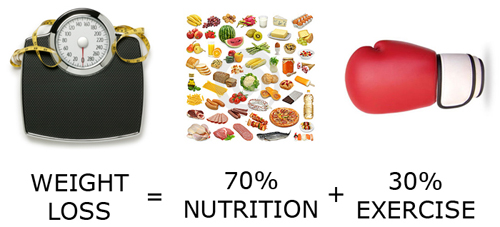
Eating not only involves what you eat, but also how much you eat and your emotions play a big part as well. Here are five nutritional tips to help you achieve the 70%:
-
Try drinking a large glass of water 10 to 15 minutes before a meal. The water will partially fill your stomach and may reduce your hunger levels.
-
If you find yourself eating chocolate or lollies in between meals, try eating a handful of unsalted nuts instead. While some nuts are relatively high in fat, the fat they contain is the 'good' fat that our body needs to stay healthy.
-
If you are a weekend food binger, plan your meals and snacks ahead so you have plenty of healthier snacking options in the house.
-
Use smaller plates to control the portion sizes as most of us will eat everything on our plates. If you are still hungry, wait 20 minutes before going for seconds.
-
When eating out, always choose the smallest portion size available and fill up with a side salad (preferably one without the creamy dressing).
The A To Z Of Good Health
As a society, we are becoming increasingly fatter. If you consume more kilojoules/calories (eat) than you expend (exercise) then you will grow fatter. Hopefully the following general A to Z guidelines of nutrition and exercise will lead to optimal health.
Aerobic exercise at least three times per week for 40 minutes each time, to maintain your fitness levels.
'Breakfast like a king, lunch like a prince and dinner like a pauper’ – basically breakfast is the most important meal of the day because it’s when you fuel your body for the day.
Caffeine has been proven to be of benefit for fat loss, but no more than 300mg per day (three cups of coffee) and is best taken prior to your morning cardiovascular session.
Drinking water is equally important as we are made up of 60 to 70 per cent fluid and should drink 8 to 10 glasses per day.
Educate yourself on what is hot and what is not in relation to your own personal health and fitness.
Fasting, or the practice of going without food for days at a time, has been shown to lead to a deficiency of essential vitamins and minerals that the body needs to function. It can also cause a slow down in the body’s metabolism, which does not assist weight loss.
Goals should be realistic for both the short and long term an are as important as once you set off on your health and fitness journey you need to keep sight of your destination.
Help from a professional (whether training or nutritional) is the best way to achieve great results and can save you time and money on the quest for your goal.
Iron is an important nutrient to ensure your immune system is strong and healthy. Exercise can cause iron loss, and people who don’t eat red meat can sometimes have an iron deficiency. Also, women should be aware that during menstruation, iron is lost.
Jogging can be a great way to burn large amounts of calories, but is not necessarily suited to everyone as it is a high impact activity.
Knees are one of the most common problem areas for exercisers, but correct technique and stretching will help prevent injuries.
Lifestyle should be considered when setting goals, to ensure they are achievable and realistic.
Metabolism, or the body’s ability to burn calories for energy, can be assisted by training regularly, adding lean muscle tissue, eating certain spicy foods. While training, you get an increase in your metabolic rate that lasts for several hours.
Nutrition, and research into the fat cell and fat loss suggests we should eat four to five small meals each day, rather than three large ones to maximise our metabolic rate.
Overtraining – the ‘more is better’ principle is not accurate in this instance, as overtraining has been found to be counterproductive to long term results.
Protein is another nutrient that is deficient in a lot of exercisers but is essential for optimal health. Common sources of protein include eggs, red meat, nuts, seeds, legumes, dairy foods and grains.
Quality, not quantity, is the key to success so aim to work the muscles to failure each time and if you can do more reps on your next visit, then do them – don’t stop at a given number if you can do more.
Rest is just as important as exercise and allows the body a period of recovery. Find the best form of relaxation that suits you and do it regularly to avoid stress.
Smoke – if you smoke, not smoking for two hours before exercise will help your body as it limits its ability to transport oxygen via the blood around, due to toxins from the cigarette infesting the lungs by binding themselves to your red blood cells.
Thermogenesis is the production of body heat through: (i) oxidation of foods; (ii) physical means; and (iii) biochemical means. There are ways to induce this calorie-burning thermogenic response in your body, to enhance your fat loss efforts, like eating certain herbs and spicy foods.
Unsaturated fats (mono or poly) or ‘good’ fats are essential in helping to lower LDL (bad) cholesterol.
Vitamins – there are fat soluble vitamins (A, D, E, K) and water soluble vitamins (B1-12, C), all of which are an essential part of your diet because they serve to help the body function optimally. The vitamins A, C and E are also called anti-oxidants and they help to fight the problems caused by free radicals, which roam the body trying to steal healthy cells.
Weight training, also called resistance or strength training should be included in any health and fitness regime, as it adds lean muscle tissue to your body, increases your metabolism, improves posture and delays the onset of osteoporosis.
Xercise in any form has many benefits – better sleeping patterns, improved health, lowered stress levels, increased mental awareness, decreased body fat, reduced risk of health related conditions such as heart problems, cancer, Alzheimer’s, depression, etc.
You are the person that you should be caring for. Motivate yourself to stick to your health and fitness program and you will thank yourself in the long run.
Zzz. Sleep is a very relaxing activity and is required by your body to repair your cells and restore your energy levels for the following day.
Courtesy of Australian Fitness Network
Dry July
Dry July is a social fund-raising event where an individual or team can sign up to the challenge of a month long sponsored abstinence from alcohol. The funds raised directly benefit the lives of adults living with cancer right across Australia. Dry July is about clearing your head and making a difference. Get healthy, challenge yourself, encourage positive change and a healthy attitude to alcohol consumption.

For more information, visit the Dry July website at www.dryjuly.com.
Nothing contained in this newsletter is intended to be used as medical advice and it is not intended to be used to diagnose, treat, cure or prevent any disease, nor should it be used for therapeutic purposes or as a substitute for your own health professional's advice.
|